
Types of Headphones
 Byadmin

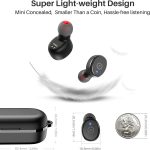
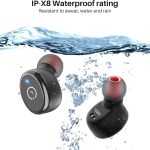
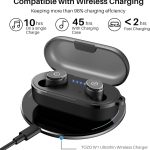
Headphones come in various forms, each with its own advantages:
- Over-Ear Headphones: These cups fully enclose your ears, providing excellent passive noise isolation and often the best sound quality due to larger drivers. They are generally comfortable for long listening sessions and popular among audiophiles and professionals.
- Closed-Back: Offer superior noise isolation, preventing sound from leaking in or out. Ideal for noisy environments or recording.
- Open-Back: Allow air to pass through the earcups, creating a more natural, spacious soundstage. Best for quiet environments where sound leakage isn’t an issue.
- On-Ear Headphones: These sit on top of your ears rather than enclosing them. They are generally more portable than over-ears and offer a good balance of sound quality and comfort, though passive noise isolation is less effective.
- In-Ear Headphones (Earbuds/Earphones): These are the most portable option, fitting directly into your ear canal.
- Wired Earbuds: Traditional earphones with a cable.
- Wireless Earbuds: Connect via Bluetooth, often with a neckband connecting the two earbuds.
- True Wireless Stereo (TWS) Earbuds: Completely cable-free, with each earbud operating independently. They typically come with a charging case.
Key Features and Technologies
When choosing headphones, several features can significantly impact your experience:
Multi-point Connectivity: Allows headphones to connect to two devices simultaneously, seamlessly switching between them (e.g., your laptop and phone).
Wired vs. Wireless:
Wired: Offer the most reliable connection and often superior audio quality (especially with high-resolution audio) as there’s no compression or latency associated with Bluetooth. No battery life concerns.
Wireless (Bluetooth): Provide freedom of movement and convenience. Bluetooth 5.0 and newer versions offer improved range, stability, and data transfer rates. Advanced codecs like aptX HD and LDAC enable high-resolution audio over Bluetooth.
Noise Cancellation:
Passive Noise Cancellation (Noise Isolation): Relies on the physical design of the headphones (e.g., snug earcups, well-fitting ear tips) to block out external sound.
Active Noise Cancellation (ANC): Uses microphones to detect ambient noise and then generates an “anti-noise” sound wave to cancel it out. This is particularly effective for low-frequency, continuous sounds like engine hums. Hybrid ANC systems use microphones both inside and outside the earcups for even better noise suppression.
Adaptive ANC: A more advanced form where the noise cancellation level automatically adjusts based on your surroundings.
Transparency Mode: Allows ambient sounds to pass through the headphones, so you can hear your surroundings without taking them off.
Sound Quality:
Drivers: The components that produce sound. Larger drivers generally mean better bass response and overall sound. Types include dynamic, balanced armature, planar magnetic, and electrostatic.
High-Resolution Audio: Support for audio formats that offer a higher sampling rate and bit depth than standard CD quality, resulting in a more detailed and immersive sound.
Audio Codecs: For wireless headphones, the codec (e.g., SBC, AAC, aptX, LDAC) determines how audio is compressed and transmitted, impacting sound quality.
Battery Life & Charging: Crucial for wireless headphones. Many modern wireless headphones offer 20-30+ hours of playback, with fast-charging capabilities. True wireless earbuds often rely on their charging cases for extended battery life.
Microphones & Controls: Built-in microphones are essential for calls and voice assistants. Controls (physical buttons or touch-sensitive panels) on the headphones allow you to manage playback, adjust volume, and answer calls without reaching for your device.
Comfort and Fit: Ergonomic design, lightweight materials, and various ear tip/cushion options are vital for comfortable extended wear.
Water Resistance (IP Rating): Important for active users. An IP (Ingress Protection) rating indicates how well a device is protected against solids (like dust) and liquids (like sweat or water).
Special Features:
Spatial Audio: Creates a 3D audio experience, making sound appear to come from all around you. Some versions include head tracking for an even more immersive feel.
Bone Conduction: Headphones that sit on your cheekbones and transmit sound directly to your inner ear via vibrations, leaving your ear canals open to hear ambient sounds. Ideal for outdoor activities where situational awareness is key.
Health Tracking: Some newer earbuds integrate sensors to monitor heart rate, body temperature, or even workout intensity.
AI Integration: AI is increasingly used for personalized sound profiles, adaptive noise cancellation, and enhanced call quality by filtering background noise.